Reviewed · SCUBA DIVING
Tenerife: Puerto Colon Discover Scuba Diving Trip
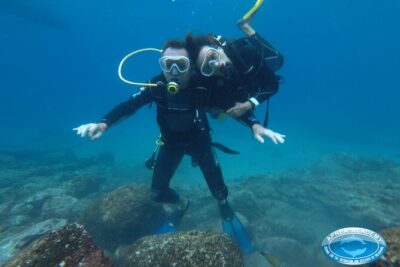
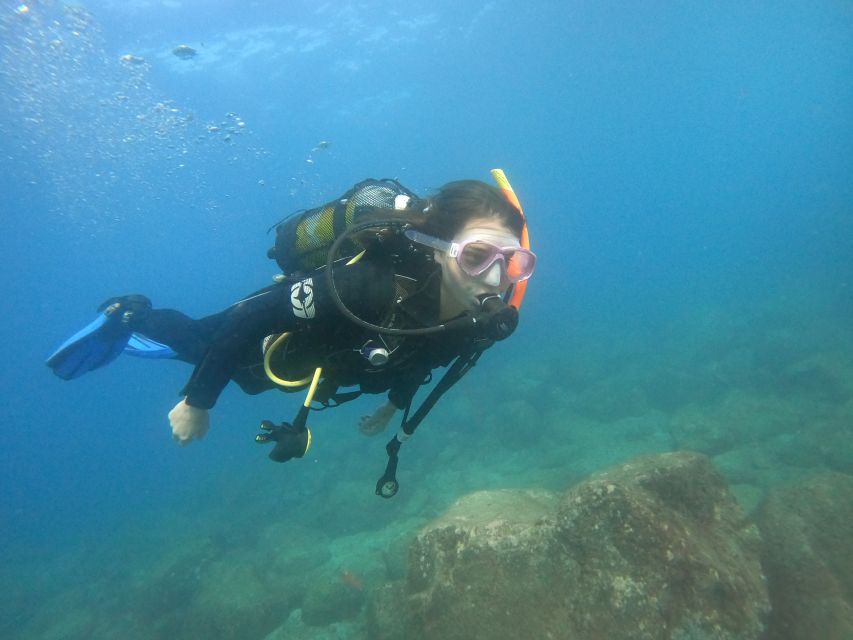
Puerto Colón is a smart place to try your first real look at underwater life in Tenerife. You get a structured PADI DSD experience, including a boat ride and a supervised session that takes you down to 12 meters.
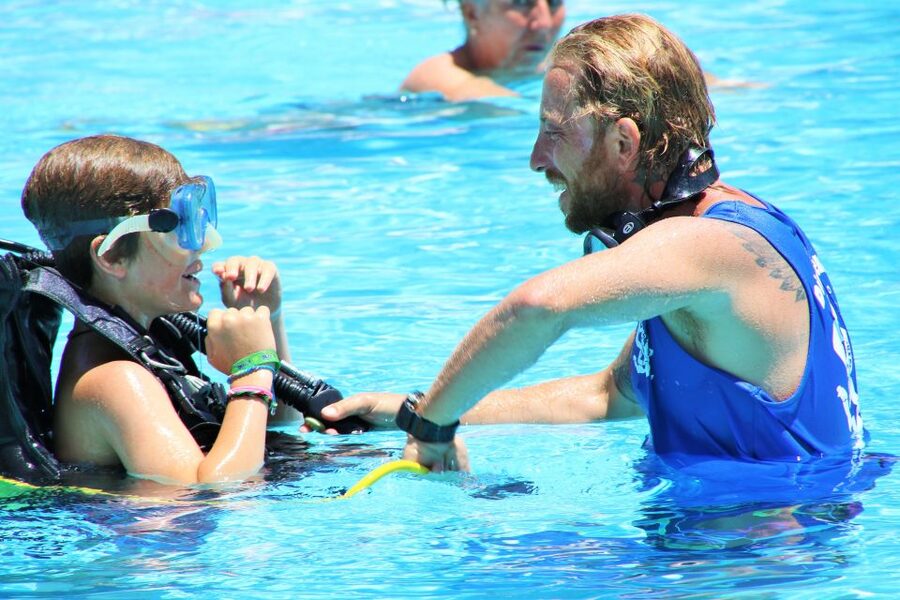
I love how this is set up for first-timers, with a real safety briefing and hands-on coaching so you know what to do once you’re in the water. I also like the fast, fun format: a short speedboat trip along the coast, then a focused underwater session with your guide close by, like instructors Max and Toby who are known for keeping people calm and comfortable.
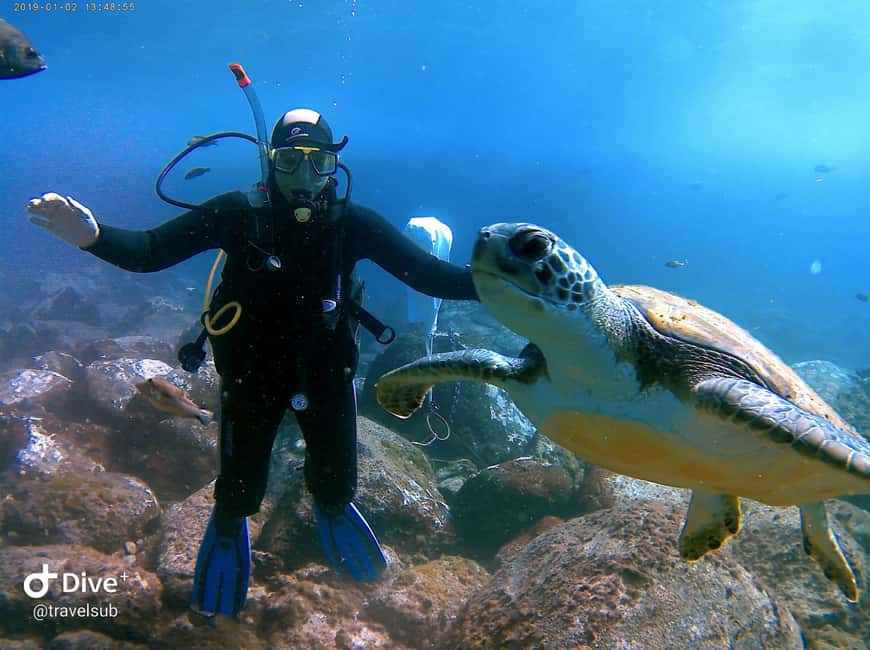
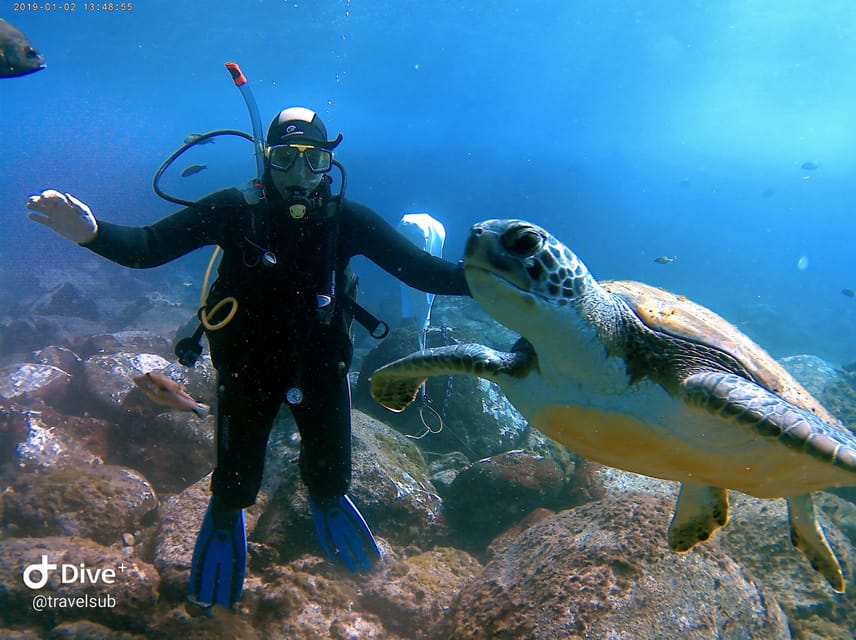
The only drawback to plan for is that special sightings are never guaranteed. You might spot turtles, rays, and other marine life, but the operator does not promise turtles.
Key highlights worth getting excited about
- PADI DSD setup for beginners, with direct PADI Professional supervision
- Speedboat ride along Tenerife’s coast before and after your underwater session
- Underwater session to 12 meters, built for a controlled first experience
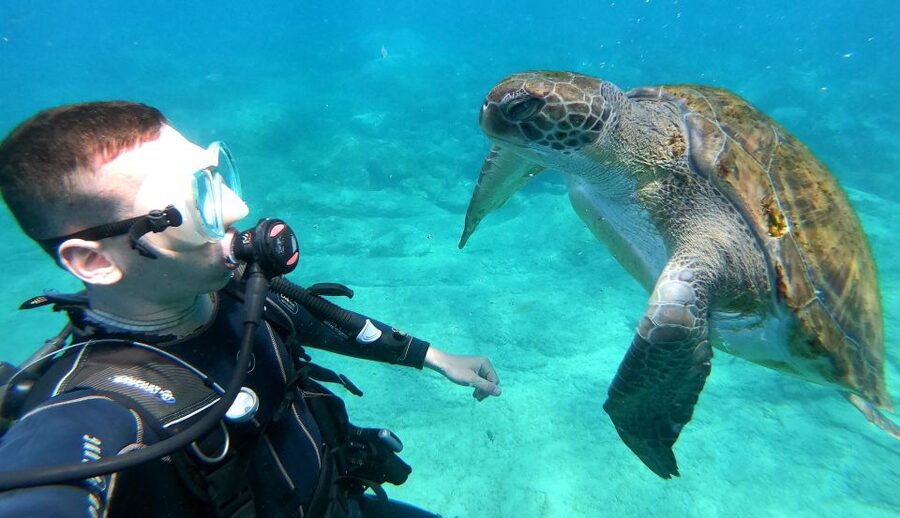
- Wildlife chances like rays, fish, and possible turtles (turtles are not guaranteed)
- All basic scuba gear included, from mask and fins to tank and gauges
- PADI DSD certificate at the end, helping you decide if you want the full course
Puerto Colón and the quick-start format that makes first-time scuba feel doable
This experience works because it does not drag. You show up at Travel Sub’s reception at ESCUELA NAUTICA, in front of pier 5 inside the private parking area in Puerto Colón, then you’re guided through what you need, in the right order, before you go underwater. The whole program runs about 3 hours, with time split between briefing, boat ride, and a single underwater session.
You’ll also appreciate that the day is not built around a long hike or hours of equipment hassle. Instead, you’re in a compact loop: get checked in, learn the basics, hop onto the speedboat, then spend a concentrated chunk of time practicing breathing underwater and moving with your gear.
One more practical plus: this is designed for people who want the underwater try-out without committing to a full certification course right away. If your main goal is to understand what it feels like to breathe underwater and get coached through key skills, this is a very efficient way to do that.
More dive trips in Tenerife:
- Tenerife: Beginners Scuba Dive Experience in Turtle Area
★ 4.6 · 1,347 reviews - Tenerife: Beginner’s Dive at a Spot with Turtle Sightings
★ 4.7 · 627 reviews - Tenerife First Time Scuba Dive – Turtle Habitat, Small Groups
★ 4.5 · 456 reviews
Safety briefing and gear fitting: the part that really decides how good the session feels
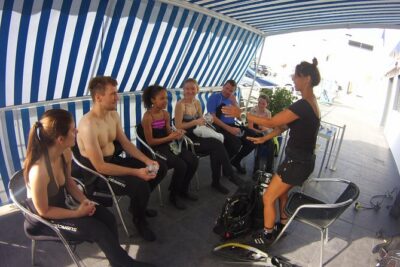
The program starts with a 30-minute safety briefing, and that matters more than most people expect. With first-time scuba, the biggest fear is not the ocean. It’s the unknown: What if I panic? What if I can’t breathe? What if I don’t know what the equipment does?
This is why the briefing focuses on the basics you’ll use underwater. You’ll go over the equipment you’ll wear and how it works as a system, so your mask seals, your regulator delivers air, and your buoyancy device helps you control your position. You’ll also learn key skills you’ll use on every scuba activity, so you’re not guessing once you’re at depth.
Gear fitting is another make-or-break moment. One big reason people come away feeling confident is that instructors help match the right setup to your experience and comfort level. If you get an instructor like Max or Toby, the coaching style is described as patient and close-up, meaning you’re not left to figure things out alone in the water.
What you should watch for: your equipment comfort in the real world. Bring your energy for a short briefing, ask questions in clear terms, and be honest about what feels unfamiliar. If you communicate early, you’re more likely to have a smooth and calm underwater session.
The speedboat ride along Tenerife: views, movement, and a clean pace
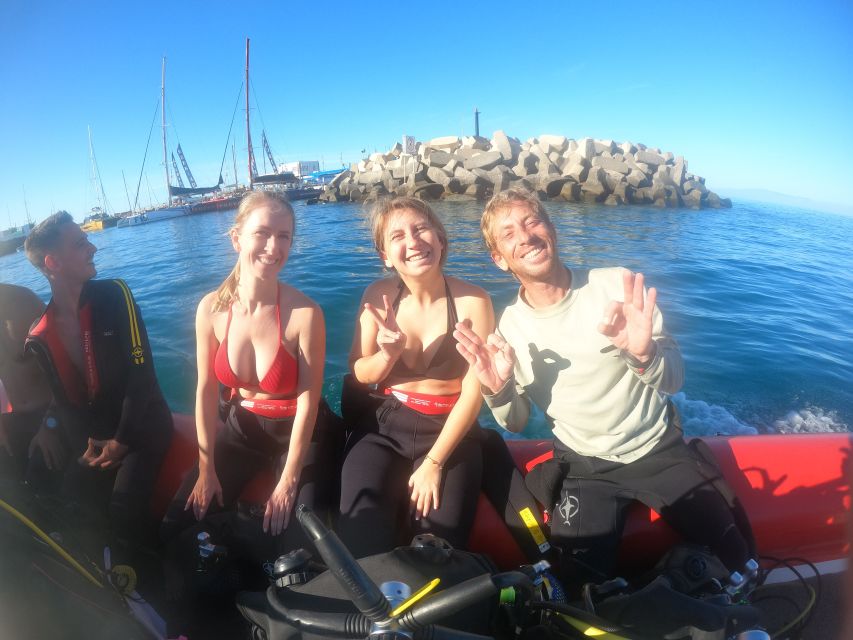
You get a 15-minute speedboat hop out toward the underwater spot. For many first-timers, this is the mental warm-up. You’re transitioning from dry land to open water, you can look around, and you get the lay of the sea conditions without yet being responsible for your own breathing system.
Then you do a second speedboat leg after your underwater session, again about 15 minutes, which helps keep the day moving and keeps the program feeling contained.
A small note that helps you plan: the whole schedule is tight. So if you tend to run late when you travel, build in extra time to find the meeting building at ESCUELA NAUTICA in front of pier 5. Getting there smoothly makes the briefing feel easier instead of rushed.
Your 40-minute underwater session to 12 meters: what you’ll actually do
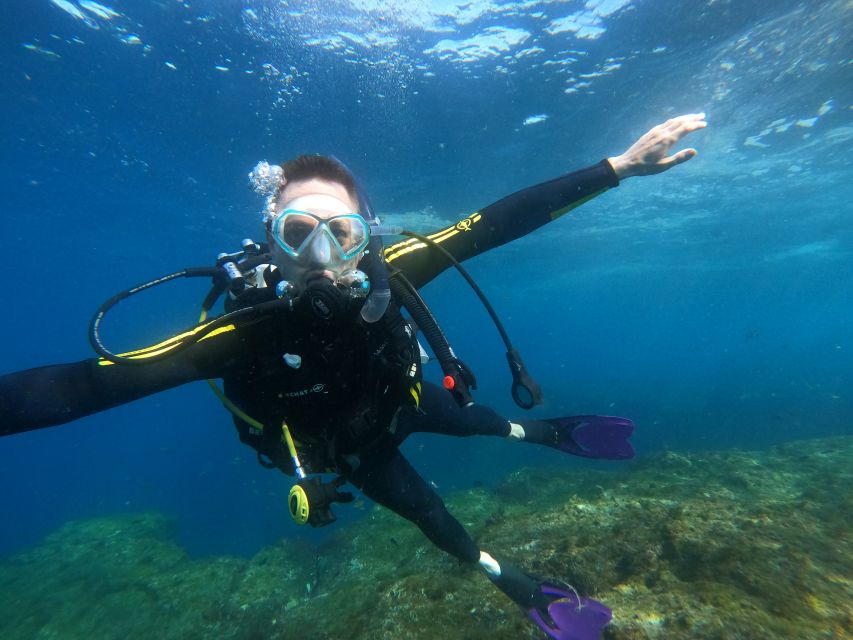
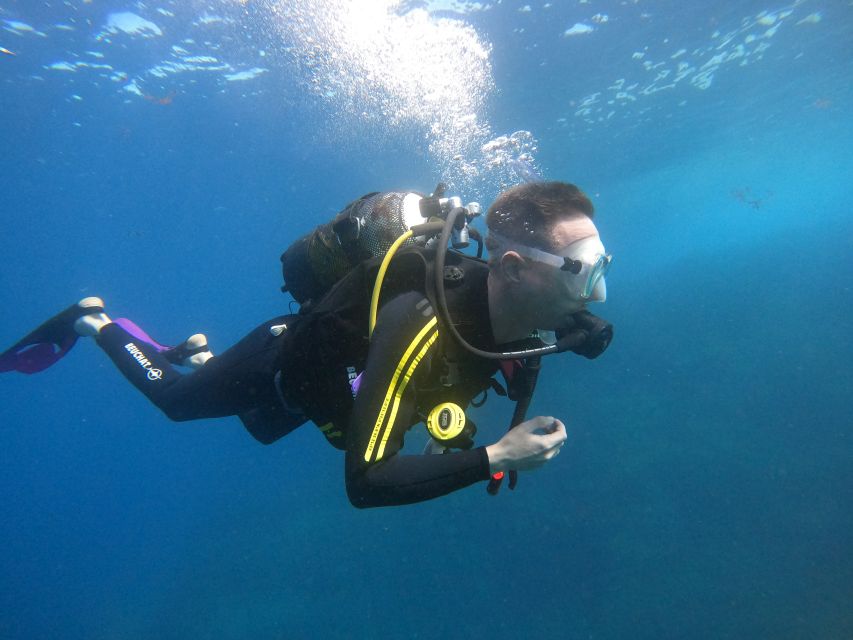
The underwater part is designed as a controlled introduction. You’ll spend around 40 minutes underwater, guided by a PADI Professional. The experience is built around the idea that you’ll practice key skills and then enjoy swimming and exploring at a level that matches the program format.
At 12 meters, you should expect conditions that feel different from snorkeling. Light changes, breathing is slower and more deliberate, and your sense of direction shifts a bit. The program is set up to help you manage that with constant supervision and a briefing-driven plan.
You may not think about it before you go, but the equipment truly changes how your body moves. The buoyancy device and fins affect your balance and speed. That’s why the briefing about how gear lets you move underwater is so important. You’re not just “watching fish,” you’re learning how to move safely in that environment.
Same island, a completely different kind of day:
- Siam Park Entry Tickets
★ 4.5 · 15,710 reviews - Tenerife: Eco-Yacht Whale and Dolphin Watching and Swimming
★ 4.7 · 15,619 reviews - Los Cristianos Respectful No-Chase Whale and Dolphin Safari
★ 4.6 · 12,782 reviews - Tenerife: Loro Parque Entry Ticket
★ 4.8 · 12,411 reviews
Marine life expectations, without the hype
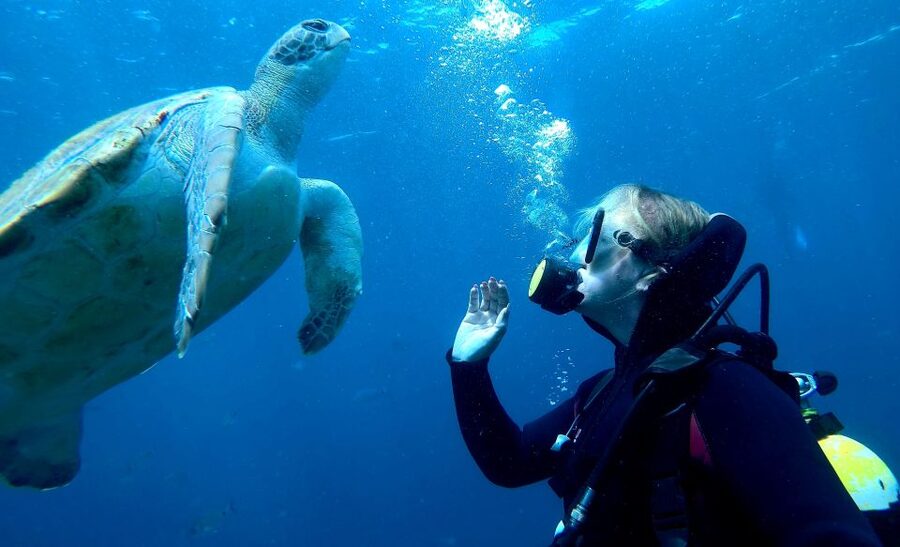
This is where Tenerife earns its reputation. The highlights include the chance to see rays, fish, and other marine life, and the underwater session can include a turtle sighting. The operator is clear that turtles are not guaranteed, so manage your expectations, stay present, and let the ocean surprise you.
If you’ve seen ocean life mostly from above water, you’ll likely be struck by how close the animals can feel when you’re in their space. Many first-timers also remember the small details, not just the headline animals. The program’s short format makes it easy to enjoy the moment rather than obsess over what you might have missed.
Your PADI DSD certificate and what it means for your next step
The whole point of a PADI DSD experience is learning, not scoring. You’ll receive a PADI DSD certificate, which gives you a documented start point for future scuba activities.
Here’s how I think about value here: for $113, you are not just buying a one-time thrill. You’re buying a supervised, structured introduction plus the certification paperwork that can make it easier to continue later. If you’re uncertain about whether scuba is for you, this is one of the most direct ways to find out.
If you decide you want more, the certificate gives you a reason to stay in the water again. If you discover you don’t like it, at least you know based on real coaching and real equipment, not a guess.
Price and value: what you get for $113 and what to double-check
The price is listed at $113 per person for about 3 hours. What makes that feel reasonable is what’s included: basic scuba gear like a mask, snorkel, fins, regulator, buoyancy control device, dive gauges, and a tank. For first-time scuba, that gear cost is often one of the hidden expenses on your own.
What’s not included is noted as photos or videos, and you may want to confirm this directly with the center. One participant described getting photos and videos after the course, so the best move is simple: ask what is included for your date and whether anything is shared afterward.
Also not included is a prescription diving mask. The experience does use a standard mask, and you can’t swap in glasses-friendly options.
Glasses and contacts: plan this before you arrive
The operator is very specific: it is not possible to use the diving or snorkeling mask with glasses. You’ll need to wear contact lenses or remove your glasses for the experience. If you rely on glasses, don’t assume you can improvise at the pier.
This is also one reason to pack an extra contact lens plan if that applies to you. If you don’t wear contacts, you’ll need an alternative solution that’s not covered by the tour.
What to bring (and the after-care rule people forget)
You’ll want to bring:
- Swimwear
- Towel
- Sunscreen
That’s it for essentials, which makes packing easier. I’d also recommend you bring a fresh top to change into after you’re back on land, even if it isn’t listed. Ocean spray plus sunscreen can get annoying fast once you’re dry again.
Then there’s the big after-care rule: plan not to fly or go to high altitude for at least 12 hours after your underwater session. This is a standard safety recommendation. If your trip includes a late flight or a quick transfer to a higher town the same day, you’ll want to coordinate your schedule so you are not squeezed into that window.
Who this is best for, and who should skip it
This is for people who want the experience of breathing underwater and learning basic skills under direct supervision. You do not need prior scuba experience, and you should be in reasonable physical health.
There are also clear limits:
- Not suitable for pregnant women
- Not suitable for people with heart problems
- Not suitable for people with diabetes
- Not suitable for people with pre-existing medical conditions
- Wheelchair accessible
- Minimum age for PADI DSD is at least 10 years old
- Also noted as not suitable for children under 8 years
If you fall into any of the medical categories, don’t “hope it will be fine.” Ask a medical professional and talk to the PADI Professional about your situation before booking.
Finally, minors need adult supervision on the boat, and the tour notes this requirement for minors.
Languages, meeting point, and staying organized in Puerto Colón
You can get instruction in English, Russian, French, Spanish, Italian, and Dutch. That helps a lot when you’re learning equipment basics and need the rules explained clearly.
Meeting point details are precise: arrive at Travel Sub’s reception in the ESCUELA NAUTICA building, in front of pier 5, inside the private parking area of Puerto Colón. When you get there, go inside the building and find reception.
A practical approach: treat the meeting point like part of the experience. If you show up early, you’ll have fewer nerves and more time to get your equipment correctly fitted.
Should you book this Puerto Colón PADI DSD experience?
Yes, if you want a structured first underwater try-out that stays short, guided, and beginner-friendly. The included gear, the direct supervision, and the fast Puerto Colón format make this a good value for people who want clarity quickly: you’ll learn the basics, see real marine life, and leave with a PADI DSD certificate.
Be cautious if you’re managing any of the health concerns listed, if you can’t do contact lenses, or if your schedule requires flying or high altitude soon after. Also, if turtle sightings are your only reason to go, keep expectations flexible since turtles are not guaranteed.
If you’re deciding between “just watching the coast” and “trying the underwater experience,” this tour is best when you’re willing to participate and follow the plan closely. You’ll get the most out of it when you treat the briefing as the start of the real fun, not the boring waiting period.
FAQ
How long is the Tenerife Puerto Colón Discover Scuba experience?
The total duration is about 3 hours.
Where do I meet for the trip?
Meet at the reception of the Travel Sub center in the ESCUELA NAUTICA building, located in front of pier 5, within the private parking area of Puerto Colón.
Do I need prior scuba experience?
No prior experience is required for the Discover Scuba (PADI DSD) introduction. You’ll learn safety guidelines and skills under direct supervision.
What is the minimum age?
The PADI Discover Scuba (DSD) program requires participants to be at least 10 years old. The activity also states it is not suitable for children under 8 years.
Is it guaranteed that I will see turtles?
No. The tour does not guarantee turtle sightings.
What scuba gear is included?
Included gear is the basic set: mask, snorkel, fins, regulator, buoyancy control device, dive gauges, and a tank.
Are photos or videos included?
No. Photos or videos are listed as not included.
Can I wear prescription glasses with the mask?
No. It is not possible to use the diving or snorkeling mask with glasses. You need contact lenses or you must remove your glasses for the experience.
What should I bring?
Bring swimwear, a towel, and sunscreen.
Is it safe to fly after the underwater session?
You should plan not to fly or go to high altitude for at least 12 hours after diving.
Is there a cancellation policy?
Free cancellation is available up to 24 hours in advance for a full refund.
Recently reviewed around Tenerife
- Shibari on the Beach★ 5.0 · 13 reviews
- Self Guided Scavenger Hunt – Costa Adeje★ 4.5 · 30 reviews
- Whale and dolphin watching tour Los Gigantes and Masca in small groups★ 5.0 · 30 reviews
- Sealife Dolphin & Whale Watching aboard Portuguese schooner★ 4.0 · 7 reviews
- Private boat tour★ 5.0 · 6 reviews
- Tenerife Under The Sea – dive into 1-1 personalised experience★ 5.0 · 15 reviews
- Scuba Night Dive on Tenerife★ 5.0 · 6 reviews
- Fishing trip, Tenerife Sea Passion★ 4.5 · 68 reviews
Scuba Diving, compared.
Beginners Scuba Dive Experience in Turtle Area
Read our review →
Beginner’s Dive at a Spot with Turtle Sightings
Read our review →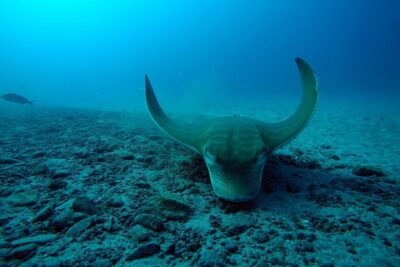
Tenerife First Time Scuba Dive – Turtle Habitat, Small Groups
Read our review →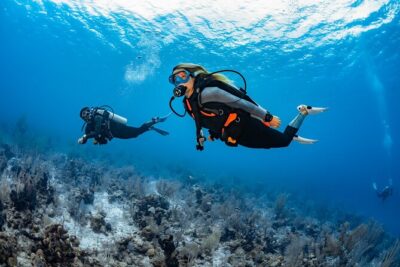
Try Dive – PADI Discover Scuba Diving in Tenerife
Read our review →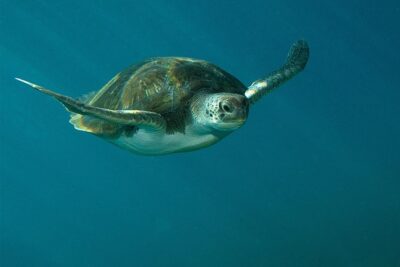
RECREATIONAL DIVE (certified divers only) : Explore Canarian Sealife
Read our review →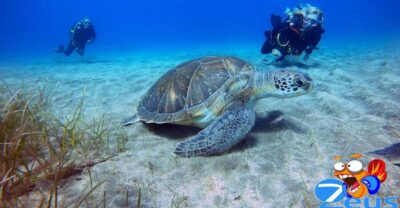
Scuba Diving Beginner’s Session in Costa Adeje
Read our review →