Reviewed · SURF LESSONS
Tenerife : clases de surf para principiantes y intermedios
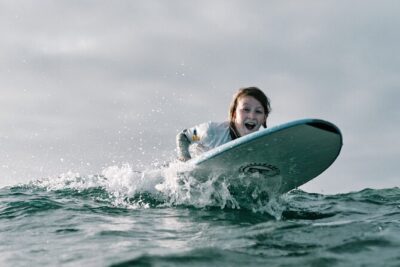
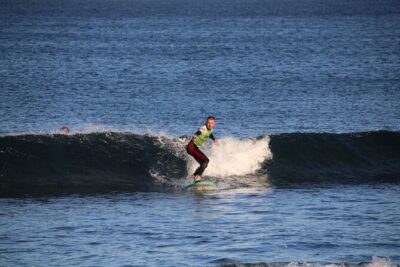
Surf lessons in Tenerife are interesting because you’re learning in a real surf zone, not a pool with a wave machine. The best part here is the small-group coaching and the way an instructor like Israel keeps you focused on safe technique while still making it fun. The lesson is also a social win, since you’ll meet people from different countries right on the beach.
The main drawback to plan for is that you only have a 2-hour total session, so if you want lots of reps all day long, you may wish you had more water time.
Key things to know before you go
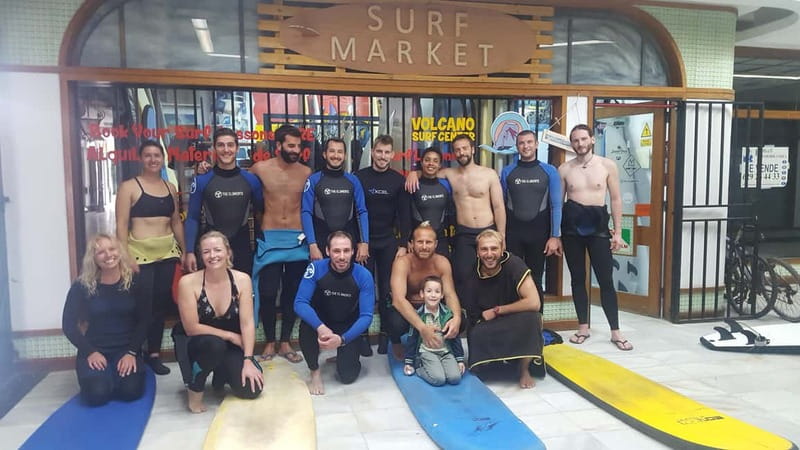
- Small group of up to 6 means the instructor can correct you fast.
- 30 minutes of theory before you hit the waves, so you understand what you’re doing.
- Full gear included: wetsuit, board, and booties, so you can travel light.
- Instruction stays close to you in the water for safer wave-catching and better form.
- 18+ years of experience in surf coaching, which shows in the pacing and safety talk.
- Photography is optional to buy, so bring your own action cam if memories matter a lot to you.
Playa de Las Americas: where your first wave actually happens
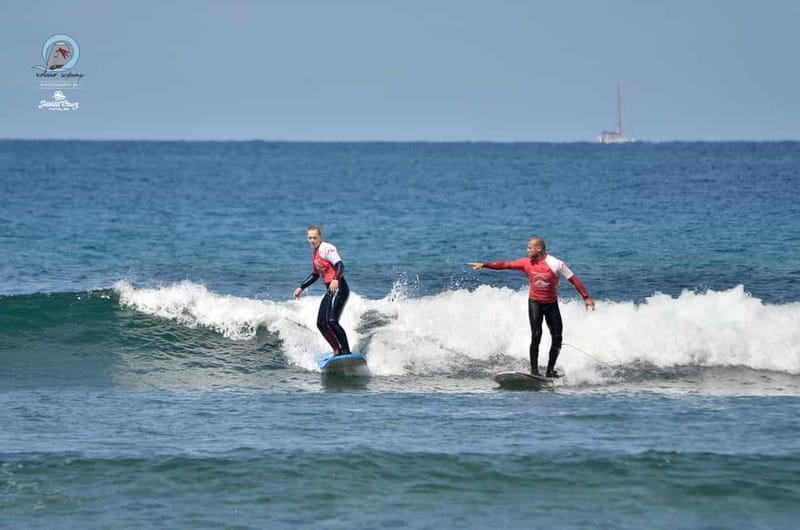
If you’re picturing your surf lesson as something you’ll do once, get pushed onto a board, and hope for the best, this setup is better than that. The school runs sessions daily at Playa de Las Americas, one of the most famous surf beaches on Tenerife. That matters because you’re not hunting for the right place. You’re arriving where surf conditions are already part of the routine.
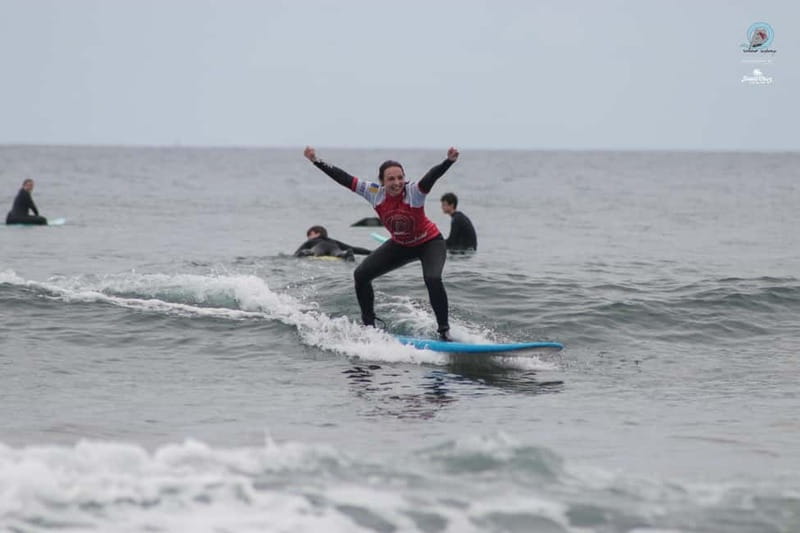
Also, south Tenerife is a strong choice for a surf day because the vibe is beach-first. You’ll find plenty of other surfers around, and that helps your brain relax. It’s easier to learn when you can look around and see people in the water who are working on the same basic skills you’re about to try.
You’ll meet at the Surf Market Volcano surf school, next to a bar. That makes it easier to orient yourself before the wetsuits come out.
More surf lessons in Tenerife:
- Group Surfing Lesson at Playa de las Américas, Tenerife
★ 5.0 · 1,072 reviews - Playa de las Américas: Private or Small-Group Surf Lesson
★ 4.8 · 980 reviews - Tenerife: Surfing Lesson for All Levels, Photos included
★ 4.9 · 861 reviews
Your 30 minutes of surf theory, designed for beginners
Before you walk into the water, you get a 30-minute theoretical lesson. This isn’t just a lecture. It’s the kind of talk that helps you avoid common mistakes quickly.
Here’s what the structure tells you about the goal: they want you to understand the basics of going into the water safely, and they want you to know what to do before you’re balancing on a board. That reduces the time you spend freezing on shore trying to remember what your instructor said.
In practical terms, that theory time is what helps you move from pure panic to something like focus. It also makes the in-water coaching more effective, because you’re not just reacting, you’re following a plan.
Wetsuit, board, and boots: gear time that sets you up to move
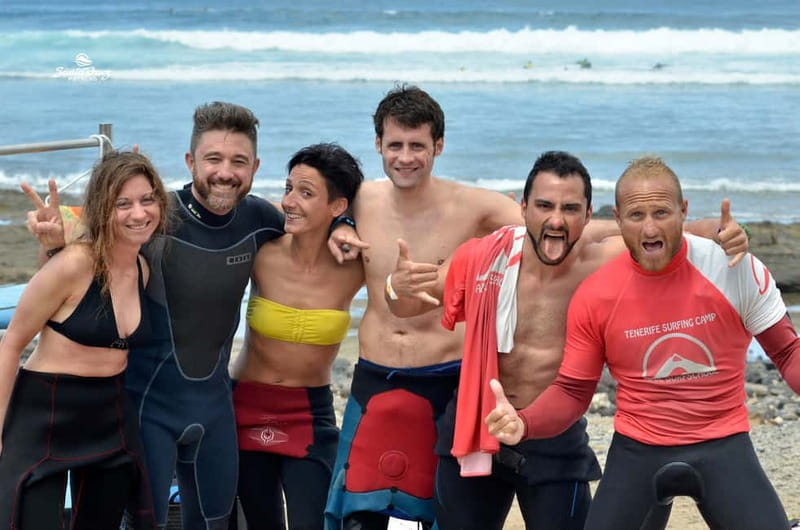
Once you’re done with the theory, you’ll put on your wetsuit and the shoes/booties, then head into the water as a group. The lesson includes the full setup: wetsuit, surfboard, and booties, so you’re not paying extra for rentals you did not plan for.
The included equipment is a value point, but it’s also a comfort point. Surf lessons often fail when a beginner shows up with the wrong fit or the wrong board. Here, you’re using gear the school provides for the session, which makes the “first real attempts” section of your lesson more likely to go well.
One small detail that can change your day: you still need to bring your own towel. The lesson includes water and fresh fruit after, but not towel service.
In the water with your instructor: safety and quick corrections
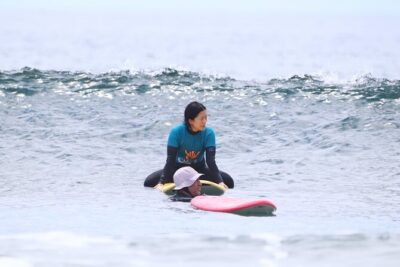
Then the real work begins. The instructor stays close to you in the water, helping you catch waves and correcting your technique when needed. For beginners, that closeness is gold. You don’t have to drift around hoping for guidance.
The in-water coaching also matters because surf is not just standing up. You have to manage timing, balance, paddling, and wave selection all at once. When the instructor can point out what you’re doing right now, not what you did ten minutes ago, your progress is faster.
You’ll also learn how to go into the water safely, which is important even if you feel confident on a beach. A surf lesson with safety built in tends to feel less chaotic. That’s the difference between a nervous first session and a session where you actually enjoy the learning curve.
Same island, a completely different kind of day:
- Siam Park Entry Tickets
★ 4.5 · 15,710 reviews - Tenerife: Eco-Yacht Whale and Dolphin Watching and Swimming
★ 4.7 · 15,619 reviews - Los Cristianos Respectful No-Chase Whale and Dolphin Safari
★ 4.6 · 12,782 reviews - Tenerife: Loro Parque Entry Ticket
★ 4.8 · 12,411 reviews
Small group energy: up to 6 people, and it shows
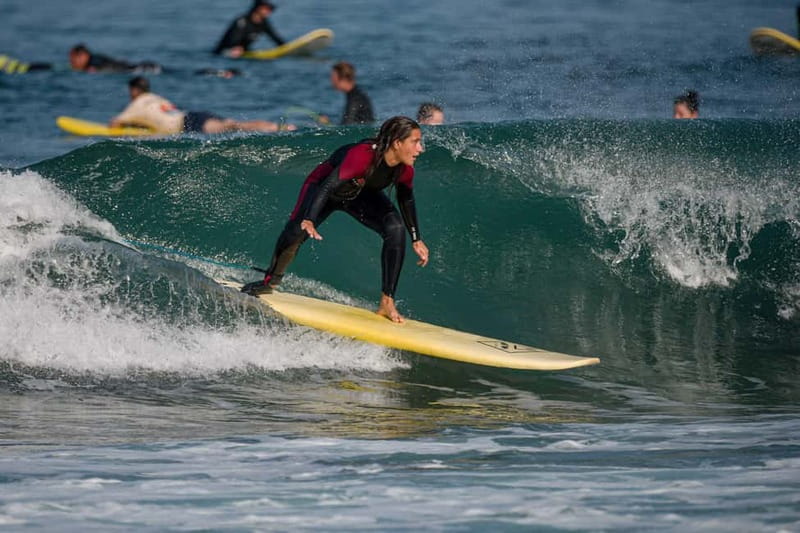
The group size is limited to 6 participants. In practice, that means you’re more likely to get individualized feedback instead of generic tips shouted from afar.
This is where the reviews line up with what you’ll feel in the moment: people love the atmosphere when the instructor can manage everyone without rushing. One review highlighted a group of three students, which is the kind of setup where you can really get coached on details. If you can, pick a time when fewer spots are available, because you’re more likely to get that extra attention.
You’ll also meet other people from around the world. That sounds like a soft benefit, but it’s real. Surf has a social side because you’re all sharing the same awkward learning moments. When the group is small, that shared experience becomes part of the fun instead of something that distracts you.
What “beginners to intermediates” means on the beach
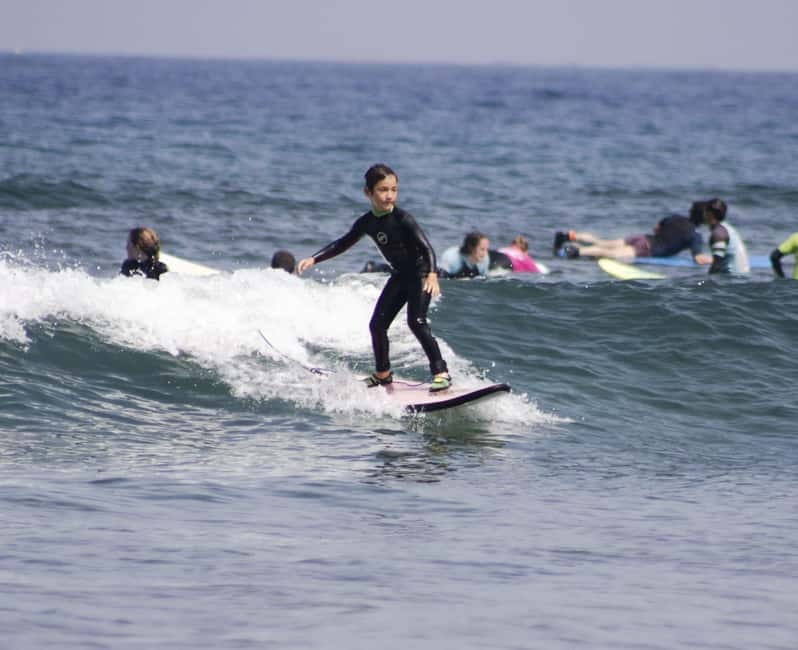
The lesson is aimed at both beginners and intermediate surfers, and that phrasing is useful because it tells you what the instructor will likely focus on. Beginners need safe entry, basic wave timing, and how to handle the board. Intermediates typically want technique tweaks, better wave-catching decisions, and more stable standing mechanics.
That’s why having an instructor who corrects you in the moment works for both skill levels. You don’t just ride one wave and call it done. You try, adjust, and try again with better instructions each cycle.
Also, the included session length helps you manage expectations. In two hours, you’re not becoming an expert. You’re building confidence and learning the sequence that makes surfing make sense.
Equipment and the photo reality check
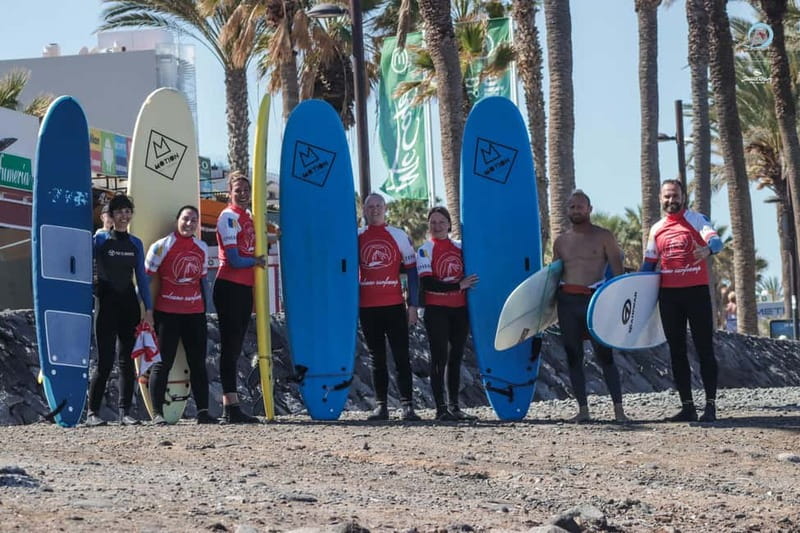
After the lesson, you head back to the school to leave equipment and change clothes. Then you’ll chat about how it went and what you felt in the water. I like that part because it turns your experience into something you can remember and improve on, instead of walking away with only adrenaline.
You can also buy personal pictures taken by a professional photographer. That’s a nice option if you want clean shots without worrying about your own camera gear in the sand.
One practical warning though, based on what people have experienced: you should not assume you’ll be automatically photographed during every attempt. If you care about video of the moment you finally stand up, bring an action cam (and use it if you’re comfortable doing so).
Value: about $38 for two hours with gear and insurance
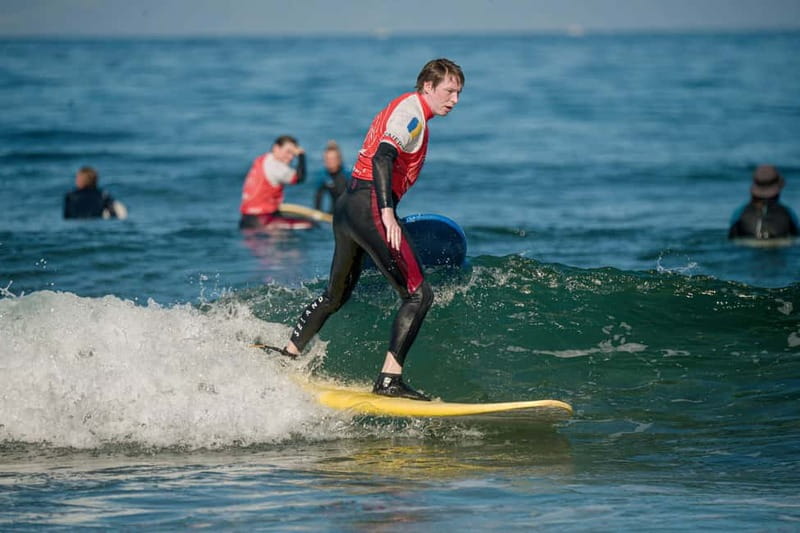
Let’s talk value in a grounded way. At $38 per person for a 2-hour lesson, you’re paying for more than board time. You’re paying for an instructor, the equipment, and also civil/medical insurance that’s included with the session.
You’re also getting a wetsuit plus board plus booties. Those rentals add up fast elsewhere, especially if you’re not local. The lesson also includes water and fresh fruit after, which sounds small until you’re hungry and sweaty and ready to head back.
In terms of “is this worth it,” I think it is if you want guided learning rather than solo trial and error. Surf is one of those sports where you can waste a lot of time doing the wrong thing. Having coaching that keeps you safer and helps you catch waves sooner is the real money-saver.
One review specifically called out price performance as very good. That matches the feeling you’ll likely have if you see how much coaching time you get inside those two hours.
Fitness and safety rules you should take seriously
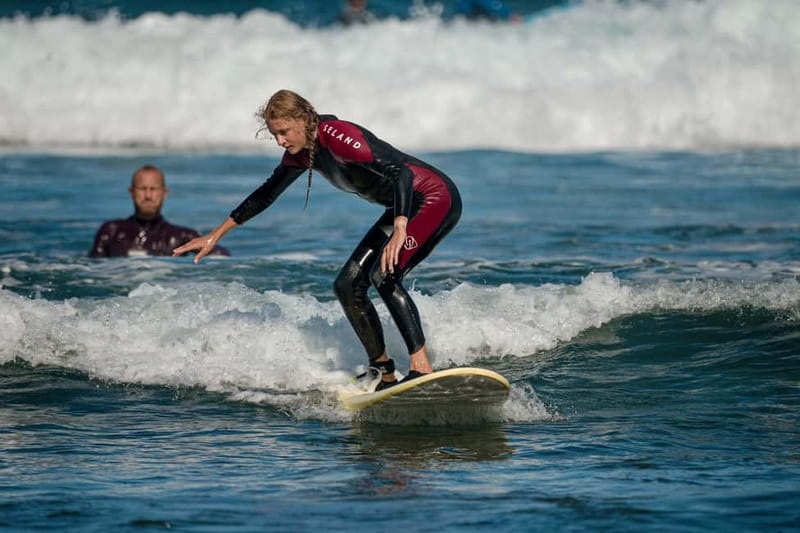
This is listed as an extreme sport, and that’s not just marketing language. You need a moderate level of fitness. That usually means paddling effort, moving with a wetsuit on, and handling the physical rhythm of catching waves.
It’s also not suitable for everyone. The lesson is not for:
- children under 10
- pregnant women
- people with back problems
- non-swimmers
- people with a cold
- people with haemophilia
- people over 55
If you’re on the edge, be honest with yourself. If you can’t swim comfortably and you’re not sure you can handle cold water and physical exertion, it’s better to choose a different activity or ask a professional first.
You should also respect the on-site rules: no alcohol or drugs, no glass objects, no explosive substances, and they ask you to not make noise or make fire. These rules aren’t about control for its own sake. They help keep the session safe and comfortable for the whole group.
Languages and coaching style: you’ll get it
The instructor can speak Spanish, Italian, English, and French, which helps a lot if you’re not fluent in Spanish. Clear communication matters in surf lessons. You want to understand how to move your body, where to look, and what to do when something goes wrong.
The instructor experience level also shows in the way lessons are paced. One person loved how Israel taught their kids quickly and made them enjoy the process. Another loved the supportive atmosphere and how the instructor corrected them while keeping the mood right.
And yes, coaching personality matters. One review mentioned the timing felt a bit flexible, which suggests the instructor is attentive to how the session is going, not just the clock.
What you should bring so the day runs smoothly
Here’s your practical packing list:
- passport
- swimwear
- towel
- sunscreen
- flip-flops
- beachwear
- credit card and cash
And don’t forget, you’re going to be in wetsuit gear, so comfort matters. Sunscreen still matters even in wetsuit season because you’ll be exposed before and after the water.
Who should book this surf lesson?
I’d book this if you want an active Tenerife day that’s outdoors, social, and coach-led. It’s especially good for:
- total beginners who want structured help and safe entry
- intermediate surfers who want technique corrections and better wave-catching
- people who like meeting others from different countries
- anyone who wants the included gear and insurance without extra planning
I would think twice if you:
- are a non-swimmer
- have back issues or other health limitations listed above
- want an all-day surf fantasy rather than a focused two-hour lesson
Should you book the Tenerife surf lesson at Playa de Las Americas?
Yes, you should book it if your goal is to stand up sooner, stay safer, and enjoy the learning process with an instructor watching closely. The combination of small groups, included equipment, and hands-on coaching makes it a strong value at around $38 for two hours.
If you’re the type who wants hours of uninterrupted practice, consider booking more than one session or pairing it with another surf day later. One session can get you hooked, but it’s still two hours. For your best results, come with realistic expectations, moderate fitness, and your towel and sunscreen ready.
FAQ
How long is the surf lesson?
The lesson is 2 hours total.
Where do I meet for the lesson?
You meet at Surf Market Volcano surf school, next to the bar.
What’s included in the price?
It includes a 2-hour surf lesson, full equipment (wetsuit, board, and boots), a titled instructor, civil/medical insurance, and water plus fresh fruit after the lesson.
Do I need to bring a towel?
Yes. A towel is not included.
Is transfer from my hotel included?
No. Transfer to and from your hotel or house is not included.
What languages does the instructor speak?
The instructor can speak Spanish, Italian, English, and French.
Is this lesson only for beginners?
No. It’s designed for both beginners and intermediate surfers, depending on what you need to work on during the session.
What should I bring with me?
Bring your passport, swimwear, towel, sunscreen, flip-flops, beachwear, and either a credit card or cash.
Are there age or health limits?
Yes. It is not suitable for children under 10, pregnant women, people with back problems, non-swimmers, people with a cold, people with haemophilia, or people over 55.
What is the skill or fitness requirement?
It’s an extreme sport, so you need a moderate level of fitness.
Recently reviewed around Tenerife
- Shibari on the Beach★ 5.0 · 13 reviews
- Whale and dolphin watching tour Los Gigantes and Masca in small groups★ 5.0 · 30 reviews
- Self Guided Scavenger Hunt – Costa Adeje★ 4.5 · 30 reviews
- Sealife Dolphin & Whale Watching aboard Portuguese schooner★ 4.0 · 7 reviews
- Private boat tour★ 5.0 · 6 reviews
- Tenerife Under The Sea – dive into 1-1 personalised experience★ 5.0 · 15 reviews
- Scuba Night Dive on Tenerife★ 5.0 · 6 reviews
- Fishing trip, Tenerife Sea Passion★ 4.5 · 68 reviews
Surf Lessons, compared.
Group Surfing Lesson at Playa de las Américas, Tenerife
Read our review →
Private Surfing Lesson at Playa de las Américas
Read our review →