Reviewed · TEIDE STARGAZING TOURS
Stargazing on La Palma
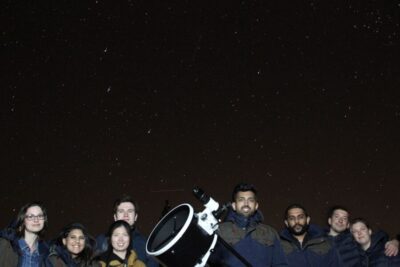
What makes this stargazing night interesting is that it is set up like a guided astronomy session, not just a slow stare at the dark. You meet at a high viewpoint, you get hands-on telescope time, and you come away with a better sense of where everything sits in the sky. I like the private-guide feel, where you can ask questions without fighting for attention.
The two things I really like about it are the professional telescope time and the way the guide walks you through planets, star clusters, galaxies, and the Milky Way. You also get astrophotography, and past groups have left with pictures to keep, not just memories. The result is that you do more than see, you understand what you are seeing.
One consideration: the experience depends on the sky cooperating, and the tour notes it requires good weather. Also, private transportation is not included, so you’ll want to plan how you get to the mirador.
Key Things to Know Before You Go
- Private guide for your group: You get focused attention, plus room for questions.
- Pro telescope viewing: You can observe planets, star clusters, galaxies, and the Milky Way.
- Sky explanations during the session: Constellations and night-sky objects are explained as you look.
- Astrophotography included: The experience is built around photography as well as observation.
- English offered: The experience is offered in English.
- Meeting-point only: It starts and ends at the same spot, so plan your own transport.
Entering the Sky at Mirador de la Cancelita
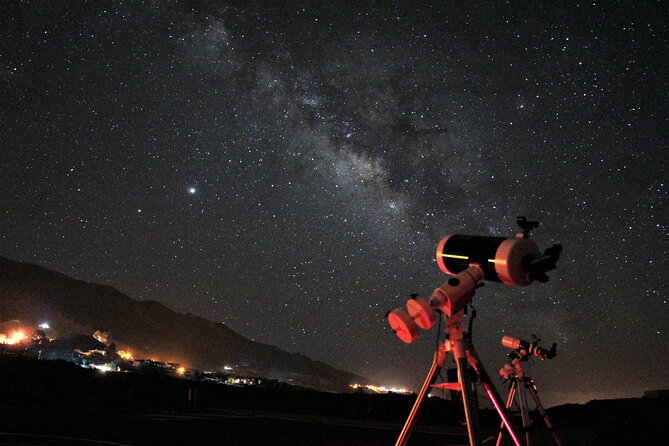
This tour is designed around a simple idea that works: start in a good viewing spot, then let an expert guide connect the dark sky to real objects you can point at. The meeting point is Mirador de la Cancelita, located at Mirador de CancelitaCam, 10, 38758 El Paso, Santa Cruz de Tenerife, Spain. Sessions start at 8:00 pm, and the experience ends back at the meeting point.
Why this matters for you: at night, the difference between a mediocre view and a sharp view is huge. A mirador setting typically gives you a wider, darker sky than you’d get from town streets. And because this is a guided setup, you are not left guessing what you are seeing when the sky turns into a mix of dots and smudges.
More stargazing nights up at Teide:
- Tenerife: Teide National Park Sunset & Stargazing Tour
★ 4.2 · 3,812 reviews - Tenerife: Sunset and Stargazing at Teide National Park
★ 4.7 · 2,826 reviews - Teide National Park Sunset & Stargazing with Dinner (Star Safari)
★ 5.0 · 2,601 reviews
Your 8:00 pm Schedule and What Happens During the 2 Hours
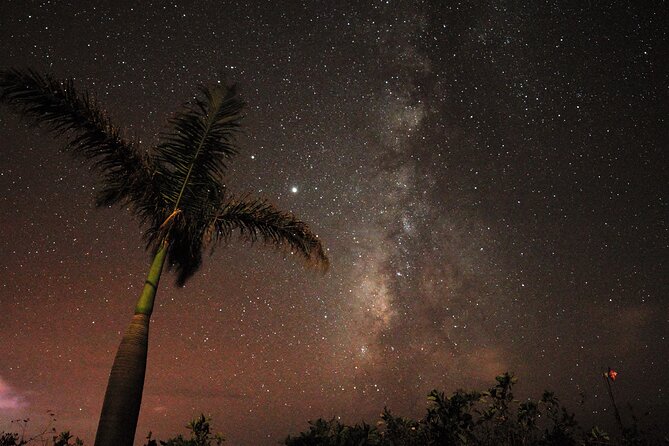
The total time is about 2 hours, give or take. In that window, you do not just look once and pack up. You get a structured evening: explanations first, then telescope viewing, then astrophotography time.
A good way to think about the timing is this. Early in the session, you get oriented. You learn how the guide is identifying objects, and what to look for as the sky deepens. Later, you spend more time on the “here it is” part, planets and star clusters through the telescope, followed by photography steps built into the experience.
Since the tour ends where it starts, you will want to arrive ready to stay out for the full block of time. No wandering required, and no transfer planned by the operator.
Telescope Viewing: Planets, Clusters, Galaxies, and the Milky Way
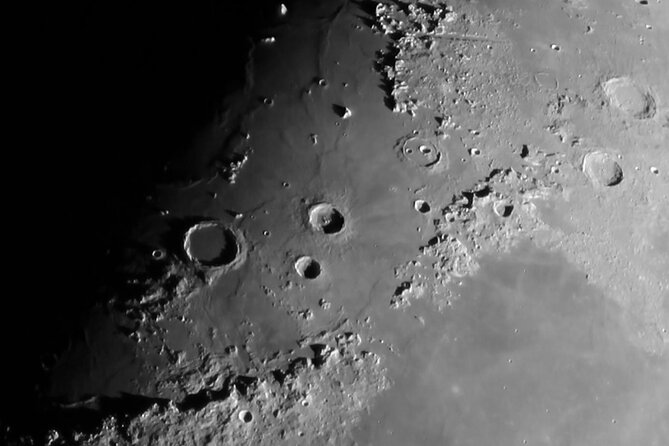
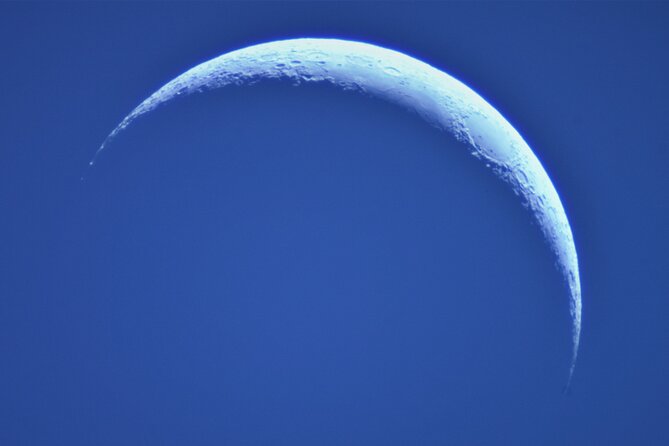
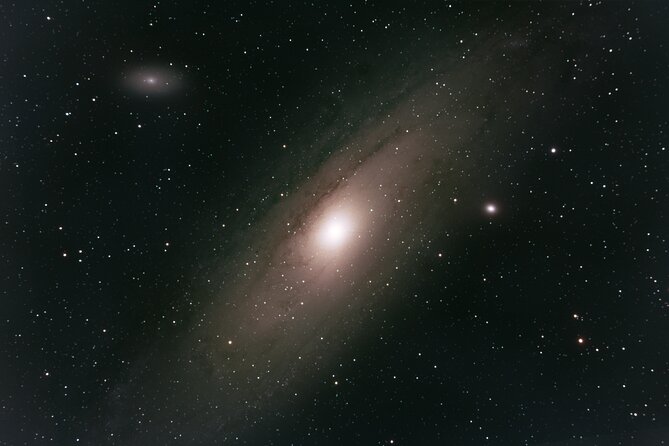
This is the main event, and it is explicitly built around telescope observation. The tour description says you will use a Pro telescope to observe planets, star clusters, galaxies, and the Milky Way.
Here is what that means in practical terms. With naked-eye stargazing, it is easy to see stars, but harder to know what each one represents. With a telescope and guidance, you can switch from “I see light” to “I see an object.” That shift is why people walk away feeling like they actually learned something, not just spent an hour outside.
Also, past groups have reported seeing Saturn when conditions aligned. That is not a promise, but it does tell you the sky targets can include bright planets, not only faint deep-sky objects.
Learning the Sky: Constellations and How Humans Navigate by Stars
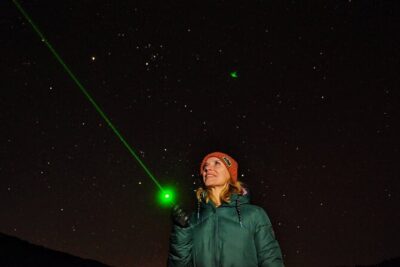
You are not just handed a telescope and left alone. The experience includes commentary about the objects you see, including constellations and what you are viewing in the night sky.
One of the best parts of a good stargazing guide is turning the sky into something you can follow. Instead of feeling overwhelmed, you start to recognize patterns. You also get context for why people have pointed at these same dots for centuries, using them for stories, navigation, and simple orientation at night.
In the session, that explanation helps you make faster connections. When the guide says “look around here,” you start seeing the sky as a map.
Same island, a completely different kind of day:
- Siam Park Entry Tickets
★ 4.5 · 15,710 reviews - Tenerife: Eco-Yacht Whale and Dolphin Watching and Swimming
★ 4.7 · 15,619 reviews - Los Cristianos Respectful No-Chase Whale and Dolphin Safari
★ 4.6 · 12,782 reviews - Tenerife: Loro Parque Entry Ticket
★ 4.8 · 12,411 reviews
Astrophotography That Builds a Real Memory
Astrophotography is listed as part of what to expect, and it is one of the strongest reasons this experience feels worth your time. Even if you are not a camera person, you benefit because the guide is doing the setup and the work that most visitors would not know how to do on the fly.
Based on reported experiences from previous sessions, the guide has sent photos after the night, including personal photos for keeps. That turns the tour into something you can share later with friends, not just something you tell people about.
Practical tip for your expectations: astrophotography outcomes depend on the night sky and conditions. But because this is a guided session with telescope use, you are at least getting the best chance of a solid result.
Your Private Guide, Group Size, and the Q&A Advantage
This is a private tour/activity, meaning only your group participates. That is a big deal for stargazing. When groups are large, one person’s confusion can derail the rhythm for everyone. Here, the tour is designed so you can ask questions and get time with the equipment.
In earlier sessions, people specifically praised the guide’s patience and friendliness, and noted that the group size stayed small enough for comfortable conversation. The guide, Andreas, has also been described as speaking multiple languages, with at least German, English, and Spanish used in past sessions.
Even if you only expect English, the payoff is the same: you get explanations you can actually follow, with time to clarify what you are seeing.
Price and Value: Why This Costs About $50 and What You Actually Get
The price is listed at $50.46 per person, and the duration is about 2 hours. On paper, that sounds simple. In practice, value comes from what is included and what is not.
Included: a telescope. That matters because the telescope is the core tool that turns observation into learning. Without telescope access, many stargazing nights become mostly guesswork.
Not included: private transportation. So your real cost depends on how you get to the meeting point at Mirador de la Cancelita. If you already have a way to reach El Paso area on your own, you are in good shape. If you rely on taxis, you may want to factor that into your total budget.
One more value point: because the guide works with your group privately, you are buying attention. You get that expert spotting advice for the best places in the area for stargazing, and you get commentary as you look.
And yes, it helps that the overall rating is 4.8 out of 5, with strong recommendation rates reported. That is a sign the format is landing for a lot of different people.
Where You Begin and End Matters for Ease
The tour starts at Mirador de la Cancelita and ends back at the meeting point. That is helpful because it reduces logistics after the session. No long pickup waits or multi-stop routing.
It also means the meeting-point address is the key reference you should save. It is easy to mix up viewpoints if you are driving at night, and the tour does not mention alternative pick up or drop off points.
Weather and the “Good Night” Factor
Stargazing lives and dies by weather. This tour explicitly says it requires good weather, and if it is canceled due to poor weather, you are offered a different date or a full refund.
For you, the strategy is simple. Do not plan this night as the one time you absolutely cannot change. Keep the evening flexible, and you will feel less stressed if clouds roll in.
Who This Tour Fits Best
This is a good match if you want more than a casual night out with star shapes. If you like the idea of learning constellations, understanding what planets and galaxies look like through a telescope, and getting photos afterward, you will probably enjoy this format.
It is also a nice fit for small groups. The private guide style and question-friendly pacing are ideal if you have a mix of first-timers and people who just want to nerd out a bit.
Because it says most travelers can participate and service animals are allowed, it should work for many visitors who can handle a short outdoor evening.
Should You Book Stargazing on La Palma?
I would book this if you want a guided, telescope-based night with explanations that actually connect to what you see. The big strengths are clear telescope viewing, patient guidance from Andreas, and astrophotography that gives you something tangible to keep.
Skip it or at least reconsider if you do not have a way to get to the mirador on your own, or if you are booking a night when you absolutely cannot be flexible about weather. Otherwise, this looks like a solid value: you pay for a short, focused evening where the sky becomes a lesson, not just a spectacle.
FAQ
Where does the tour start?
The tour starts at Mirador de la CancelitaCam, Mirador de la Cancelita, 10, 38758 El Paso, Santa Cruz de Tenerife, Spain.
What time does it begin?
The start time is 8:00 pm.
How long does the experience last?
It lasts about 2 hours.
Is transportation included?
No. Private transportation is not included.
Is this a private tour?
Yes. It is a private tour/activity, and only your group participates.
What is included in the tour?
The telescope is included.
Is the tour offered in English?
Yes. It is offered in English.
Do I need good weather for this experience?
Yes. The experience requires good weather.
Are service animals allowed?
Yes. Service animals are allowed.
What is the cancellation policy?
You can cancel for free up to 24 hours in advance for a full refund.
Recently reviewed around Tenerife
- Shibari on the Beach★ 5.0 · 13 reviews
- Self Guided Scavenger Hunt – Costa Adeje★ 4.5 · 30 reviews
- Whale and dolphin watching tour Los Gigantes and Masca in small groups★ 5.0 · 30 reviews
- Sealife Dolphin & Whale Watching aboard Portuguese schooner★ 4.0 · 7 reviews
- Private boat tour★ 5.0 · 6 reviews
- Tenerife Under The Sea – dive into 1-1 personalised experience★ 5.0 · 15 reviews
- Scuba Night Dive on Tenerife★ 5.0 · 6 reviews
- Fishing trip, Tenerife Sea Passion★ 4.5 · 68 reviews
Teide Stargazing Tours, compared.
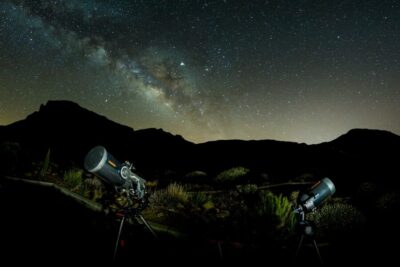
Teide National Park Sunset & Stargazing with Dinner (Star Safari)
Read our review →
Teide National Park: Sunset & Stargazing Safari with Dinner
Read our review →
Teide by Night: Sunset & Stargazing with Telescopes Experience
Read our review →
Teide: Guided Sunset & Stargazing Tour by Night with Dinner
Read our review →