Reviewed · SCUBA DIVING
PADI Open Water Diver Course
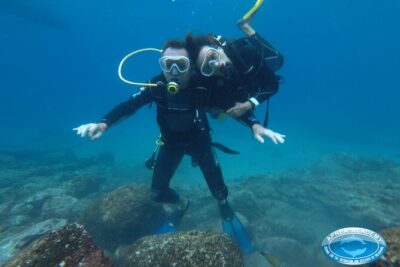
This PADI Open Water scuba certification course in Tenerife is interesting because you get a structured 3-day training plan, then you practice the skills in the real volcanic underwater world around Costa Adeje. I like that Ocean Trek Tenerife teaches in small groups, so you are not just watching from the sidelines, and you get clear coaching from instructors like Juan.
Two things I especially like are the calm, step-by-step way the team works, and how the course mixes classroom basics with practical in-water skills so it actually feels doable. The one drawback to plan for is that lunch is not included, so you will want to figure out food options near the course breaks each day.
Key highlights to know before you go
- Small-group training that stays relaxed and focused, not rushed
- Two in-water training sessions per day with different sites around Tenerife
- All equipment included, plus course materials, logbook, and PADI license fees
- Hotel pickup available by request, limited to a set travel distance
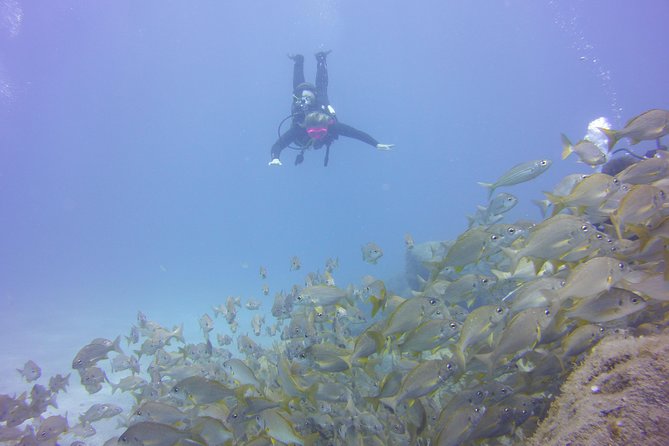
- Volcanic underwater setting where you can spot lots of fish and marine life
- Private setup where only your group participates
Tenerife’s volcanic waters and why this course fits well here
Tenerife has a knack for making first-time scuba students feel at home. You get warm enough conditions to focus on learning, and the local underwater areas are shaped by volcanic geology, which can make the whole experience feel more interesting than the generic “pool-to-ocean” story.
For me, the real value is that the course is built around repetition with feedback. You will learn the theory basics, then you apply them right away with instructors in the water, so the skills stick. And because you do multiple training sessions across different spots, you are not stuck seeing only one type of bottom or one stretch of reef-like scenery.
If you like the idea of earning a credential and then using it while traveling, this setup makes sense. After you finish the course, you are entitled to independently do scuba activities around the world, and you can rent equipment and have tanks filled where regulations allow.
More dive trips in Tenerife:
- Tenerife: Beginners Scuba Dive Experience in Turtle Area
★ 4.6 · 1,347 reviews - Tenerife: Beginner’s Dive at a Spot with Turtle Sightings
★ 4.7 · 627 reviews - Tenerife First Time Scuba Dive – Turtle Habitat, Small Groups
★ 4.5 · 456 reviews
Ocean Trek Tenerife: where you meet, pickup, and what’s actually included
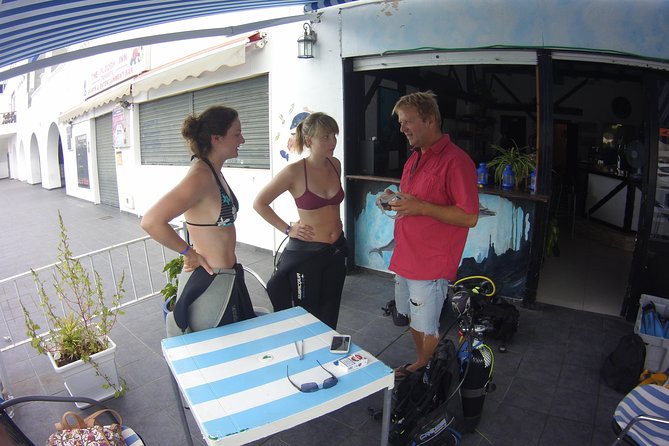
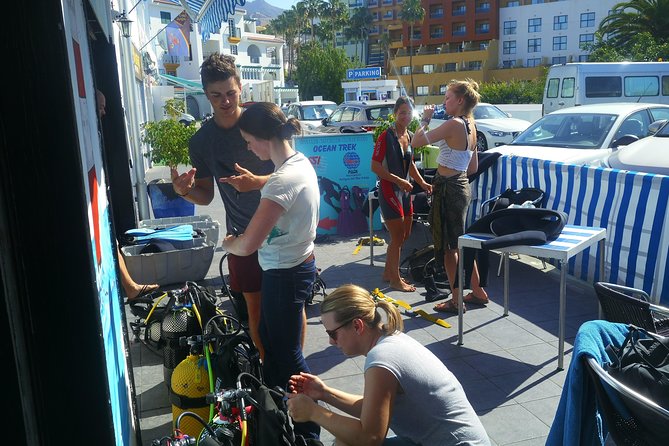
You meet at Ocean Trek Tenerife on C. Valencia in Costa Adeje. The session ends back at the meeting point, so you are not dealing with a complicated “drop me somewhere else” situation at the end of the final day.
Hotel pickup is offered by request, but it is limited by distance. The pickup coverage is up to a maximum of 12 miles (20 km) from the dive center area, and the pickup details also note a maximum distance of 10 km. If you are staying outside that range, you should plan on getting yourself to the meeting point.
What I really appreciate is how many core course items are included in the price. You get:
- Full scuba equipment
- Course literature
- Logbook
- PADI license fees
- Bottled water
And yes, you should expect that lunch is on you. The course does not include it, so bring a plan for breaks, or you will end up spending extra time figuring it out day-by-day.
The 3-day flow: theory first, then skills in small groups
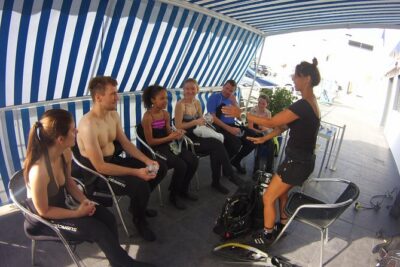
This course is set up for students who want a focused start with clear structure. You will learn the theoretical and practical basics in small groups, with instructors guiding you through the key concepts before you put them into action.
The theory part is not just “read and forget.” It is meant to give you the mental checklist you need when you are underwater, so you understand what you are doing and why. Then the practical part builds confidence through controlled practice steps.
A key detail: the training is paced for real beginners. The team emphasizes explaining, demonstrating, and then having you copy the skills with supervision. That matters because the fastest way to enjoy your first scuba experiences is to feel safe and in control, not rushed.
If you have your own learning style, you will likely appreciate the calm method. Instructors are described as adjusting to your pace instead of forcing a one-size-fits-all rhythm.
Two in-water training sessions per day, across different Tenerife sites
A big reason this course gets recommended is that you do more than “one try and you’re done.” You go for scuba practice sessions twice a day, and you visit different underwater sites.
That is a smart format for first-timers. You learn, apply, and then repeat, which helps you improve buoyancy, comfort, and basic control. It also makes the days feel active. You are not spending the whole morning doing the same drills and then repeating the exact same scene again later.
You should also expect real-world variety. The course description points to many fish and Tenerife’s interesting volcanic underwater world at different dive sites. One practical advantage of doing multiple sites is that you get experience with different underwater conditions, while still staying within the boundaries of what you are learning for Open Water certification.
A small heads-up for your schedule: days that start earlier with morning sessions can feel like full days. If you are visiting Tenerife alongside other plans, keep that flexibility in mind.
Same island, a completely different kind of day:
- Siam Park Entry Tickets
★ 4.5 · 15,710 reviews - Tenerife: Eco-Yacht Whale and Dolphin Watching and Swimming
★ 4.7 · 15,619 reviews - Los Cristianos Respectful No-Chase Whale and Dolphin Safari
★ 4.6 · 12,782 reviews - Tenerife: Loro Parque Entry Ticket
★ 4.8 · 12,411 reviews
Equipment, logbook, and what the certification unlocks after
Ocean Trek Tenerife includes full equipment, which removes one of the biggest hassles for beginners. You do not have to hunt down gear before you arrive, figure out sizing, or worry about compatibility. Instead, you focus on learning the skills correctly the first time.
You also receive course literature and a logbook. That matters more than it sounds. The logbook becomes your record of the training you completed, and it is a nice bridge between “course mode” and “real trips” later.
After finishing the course, you are entitled to independently do scuba activities around the world, rent diving equipment, and have scuba tanks filled. That worldwide usefulness is where your money starts paying off. A certification is only valuable if you actually use it, so choosing a course that sets you up confidently is a big deal.
Marine life in Tenerife: what you might spot during training
One thing I love about learning in Tenerife is that you are not staring at bland training props for three days. You learn skills while also getting exposure to actual marine life.
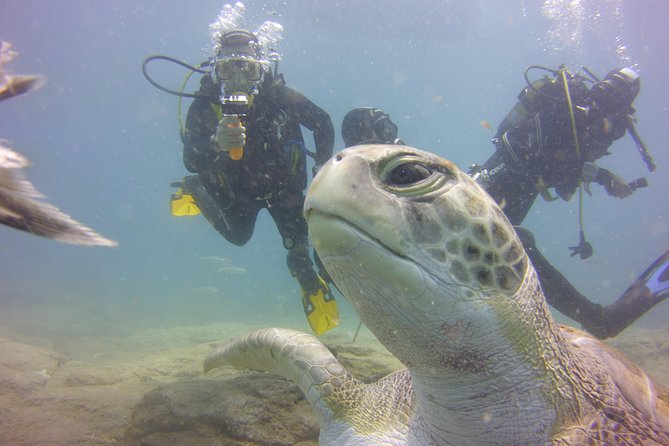
From the course setup, you can expect many fish and a volcanic underwater world. In addition, past students specifically highlight sightings like rays, turtles, octopus, and cuttlefish, along with stingrays and sea turtles. You cannot guarantee any one animal on any one day, but the fact that students consistently report these kinds of sightings suggests your odds are good when conditions cooperate.
How to make sightings easier: keep your attention on buoyancy and control first. The better you are at staying stable, the more likely you will notice motion around you without disturbing things. The instructors’ guidance typically helps you prioritize the skills, and the rest becomes a bonus.
Price and value: is $792.16 fair for 3 days in Tenerife?
At $792.16 per person for about 3 days, this course is not the cheapest option you will find. But it also includes a lot that beginners usually end up paying for separately.
Here’s what you get included in the base price:
- Pickup and drop-off within the stated distance limits
- Full scuba equipment
- Course literature
- Logbook
- PADI license fees
- Bottled water
And that is before you even consider the time value. You are getting structured instruction, theory support, and multiple in-water training sessions. For many travelers, the big cost driver in scuba courses is equipment rental plus the course paperwork. When those are already bundled, the total value often looks better than the headline price.
The two things that can affect your overall cost are simple:
- Lunch is not included
- You may have extra personal spending around transportation or meals if you are not within pickup range
If you want a small-group approach, the value also improves. Smaller groups generally mean more direct attention and less waiting. Based on the course descriptions and student feedback, Ocean Trek Tenerife runs as a tight operation, which is exactly what you want when you are learning something technical.
Who this course is best for, and who should think twice
This is a solid fit if you:
- Want a real beginner-friendly Open Water start
- Prefer small groups and calm instruction
- Are okay with a multi-session schedule over a few days
- Want a certification you can use for future travel
Minimum age is 10 years, and you should be in a reasonable state of health for scuba activities. You also need a moderate physical fitness level. If you know you struggle with mobility, long waits, or cold, you should be honest with yourself. The course is built for training, so you will be active in and out of the water.
Also note that service animals are allowed, and the meeting point is near public transportation. If you prefer independent logistics, you can plan around that.
Practical tips that make your first days easier
A few smart lessons from experienced students can save you discomfort and stress.
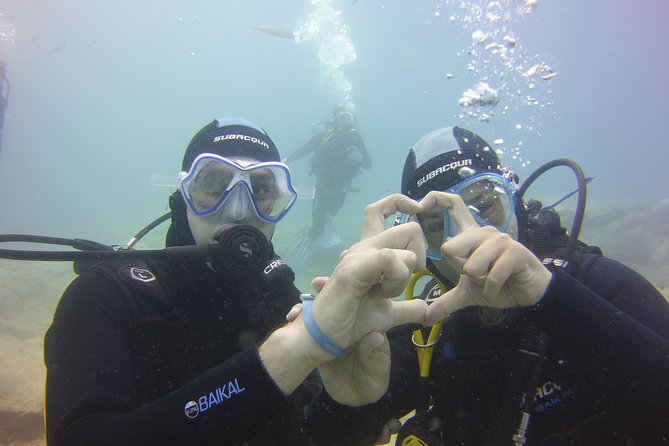
First, pressure equalization matters. Practice equalizing early, gently, and without forcing it. If you wait too long or push hard to catch up, it can make your ears hurt later in the course. If you feel strong pressure, backing up a meter and equalizing slowly is usually the better approach than forcing the issue.
Second, watch your legs. Calf muscles can cramp if you overwork them, especially in repetitive gear-in and gear-out moments. Pace yourself, and take a moment to stretch during breaks.
Third, bring dry items. Saltwater dries into crusty grit, and wet gear plus a warm car can feel unpleasant. Bring something dry to change into after your sessions. A poncho can also help, especially when you are switching between changing area to vehicle quickly.
Finally, be ready for a gear-heavy routine. Even though equipment is included, your day still revolves around it. Simple planning, like a small towel for your feet and a change of clothes, turns an annoying day into an easy one.
Booking decision: should you book Ocean Trek Tenerife?
If you want the best chance to learn confidently, I think Ocean Trek Tenerife is worth serious consideration. You get small-group attention, you practice repeatedly with instructors in the water, and your package includes the equipment and major paperwork items like PADI license fees and the logbook.
I would especially book this if you like structure and you want to finish with a real certification, not just a one-day taster. The volcanic Tenerife setting and the variety across multiple sites make the training days feel meaningful.
I would hesitate only if you really do not want to plan for meals, since lunch is not included. Also, if you have concerns about health or physical requirements, ask questions early so you are not surprised once the course starts.
If you are ready to learn at a steady pace and you want a course that feels organized and calm, this one is a strong match.
FAQ
How long is the PADI Open Water course in Tenerife?
The course runs for 3 days approximately.
What is included in the course price?
The price includes pickup and drop-off within the stated distance limits, use of full scuba equipment, course literature, logbook, PADI license fees, and bottled water. Lunch is not included.
Is hotel pickup included, and how far do they pick up?
Pickup is available by request. The maximum pickup distance is listed as 12 miles (20 km) from the dive center area, and the pickup details also state a maximum distance of 10 km.
What language is the course offered in?
The course is offered in English.
What are the age and health requirements?
The minimum age is 10 years. You should be in a reasonable state of health for scuba activities, and you need a moderate physical fitness level.
What happens if the weather is bad?
The experience requires good weather. If it is canceled due to poor weather, you will be offered a different date or a full refund.
Recently reviewed around Tenerife
- Shibari on the Beach★ 5.0 · 13 reviews
- Self Guided Scavenger Hunt – Costa Adeje★ 4.5 · 30 reviews
- Whale and dolphin watching tour Los Gigantes and Masca in small groups★ 5.0 · 30 reviews
- Sealife Dolphin & Whale Watching aboard Portuguese schooner★ 4.0 · 7 reviews
- Private boat tour★ 5.0 · 6 reviews
- Tenerife Under The Sea – dive into 1-1 personalised experience★ 5.0 · 15 reviews
- Scuba Night Dive on Tenerife★ 5.0 · 6 reviews
- Fishing trip, Tenerife Sea Passion★ 4.5 · 68 reviews
Scuba Diving, compared.
Beginners Scuba Dive Experience in Turtle Area
Read our review →
Beginner’s Dive at a Spot with Turtle Sightings
Read our review →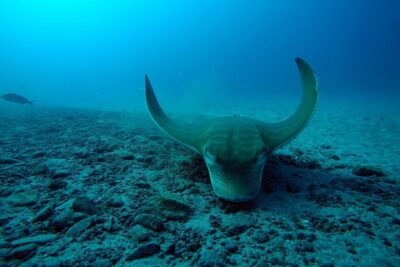
Tenerife First Time Scuba Dive – Turtle Habitat, Small Groups
Read our review →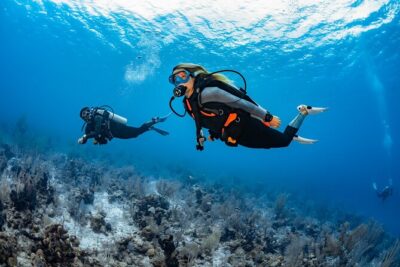
Try Dive – PADI Discover Scuba Diving in Tenerife
Read our review →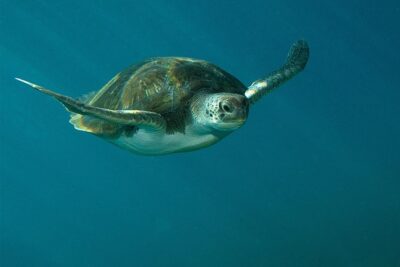
RECREATIONAL DIVE (certified divers only) : Explore Canarian Sealife
Read our review →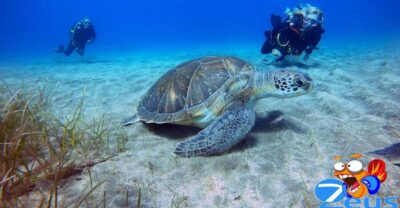
Scuba Diving Beginner’s Session in Costa Adeje
Read our review →